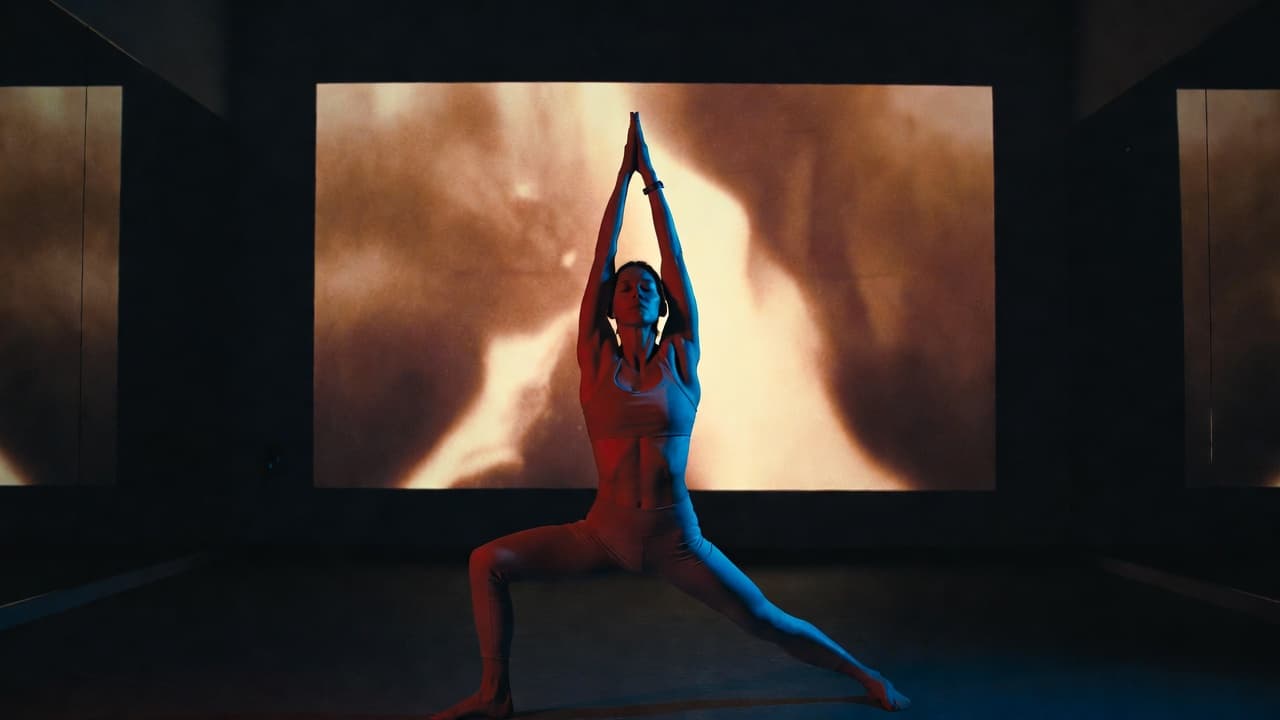
When no one's watching, you stop performing and start practicing. You listen to your body instead of worrying about how you look. You modify without shame. You push when it's right and rest when you need to. The practice becomes yours.
Most people don't realize they're performing in traditional yoga classes. Part of your attention goes to the instructor scanning the room. Part goes to the person on the next mat who seems to have it all together. Part goes to the mirror reflecting every wobble. You're not fully present in your body because you're partially present for an audience.
Remove the audience and something shifts. The instruction can still be there—guiding every pose, every breath, every transition. But without someone watching whether you follow it perfectly, you're free to make the practice fit your body instead of forcing your body to fit the practice.
This isn't about avoiding instruction. It's about practicing without surveillance. Structure without scrutiny. Guidance without the gaze.
Why This Matters
The difference between a performance mindset and a practice mindset changes everything about your experience.
A performance mindset creates:
- Tension — You hold poses tighter than necessary, trying to look stable
- Comparison — You measure yourself against others instead of your own progress
- Burnout — You push past your limits to avoid looking weak, then wonder why you dread coming back
A practice mindset creates:
- Consistency — You show up more often when it's not about being perfect
- Safety — You listen to your body instead of pushing through pain to impress someone
- Growth — Real progress happens when you're focused on sensation, not appearance
- Enjoyment — Movement becomes something you want to do, not something you have to survive
The goal of yoga isn't to perform poses correctly for an observer. It's to develop awareness of your own body. That's harder to do when part of your awareness is tracking what others think.
Who This Is For
Experienced practitioners who've hit a plateau. You've practiced for years but something feels stuck. You know the poses. You have the flexibility. But the depth isn't there. The invisible audience you've been performing for might be the wall you can't name.
Beginners intimidated by being watched. You want to try yoga but the idea of a roomful of people watching you figure it out feels terrible. You'd rather learn without observers.
Anyone who's felt self-conscious in class. You've skipped the modification because it felt like admitting defeat. You've held a pose past the point of benefit because someone might notice if you came out early. You've left class feeling judged instead of restored.
People returning after time away. You used to practice but life got busy. Now you're out of shape and the thought of being seen struggling keeps you from starting again.
Why We Slip Into Performance Mode
This isn't weakness. It's human nature.
We're social creatures. We respond to being observed—even when no one is actually judging us. The instructor might not care whether you take child's pose, but your brain registers their presence and adjusts your behavior.
Think about singing in the shower versus singing karaoke. Same voice. Same songs. Completely different experience. The shower version is free, experimental, yours. The karaoke version is a performance—even if nobody's judging, you're judging yourself through their imagined eyes.
Yoga works the same way. In a traditional class, you're aware of:
- The instructor who might correct you
- The person next to you who might compare
- The mirror that reflects everything
- Your own expectations of what you "should" be able to do
None of these are inherently bad. But they split your attention. The practice that serves your body isn't always the one that looks impressive from the outside.
What Changes When You Stop Performing
Without an audience—real or perceived—your attention goes where it belongs: inward.
You listen to your body. Not the version you wish you had. Not the one that "should" be able to do this pose by now. The one that showed up today, with whatever it brought.
You modify without shame. The block isn't a crutch. The bent knee isn't failure. They're intelligent adaptations that serve your practice instead of someone else's expectations.
You push when it's right. Some days your edge is further than you expected. Without the fear of looking like you're showing off, you can explore it.
You rest when you need to. Child's pose stops being an admission of defeat and becomes what it's supposed to be: a legitimate part of the practice.
You breathe. When you're not managing how you appear, you can focus on the breath that makes yoga actually work.
How Immersive Classes Create This Shift
ALIVE's immersive classes create something that sounds contradictory: structure without surveillance.
The instruction is there. Every pose, every breath, every transition—guided by video on floor-to-ceiling screens. You're not guessing what comes next. You're not making it up. The cueing tells you exactly what to do.
But nobody's watching whether you do it.
The instructor on screen can't see that you took child's pose instead of chaturanga. They don't know you modified the twist because your back was tight today. They have no idea you pushed deeper into that hip opener than you've ever gone before.
The Dark Room Effect
The environment reinforces the shift. Dim lighting means you can barely see the person next to you—let alone compare yourself to them. The screens pull your eyes forward, not around the room. Heat softens your body. Atmosphere softens your self-consciousness.
You're in a room with other people. Drawing energy from the shared experience. But practicing in your own private world. Alone together.
When You Do Want Eyes On You
Sometimes you do want someone watching.
When you're learning new poses. Returning from injury. Hitting a plateau you can't break through alone. Working on alignment you can't feel from the inside.
That's what coached classes are for. Same video. Same environment. But now a certified coach walks the room—watching alignment, offering adjustments, giving you the external feedback you're seeking.
The freedom isn't about avoiding instruction forever. It's about choosing when you want observation and when you want privacy.
Feeling rusty? Book coached. Get the eyes, rebuild confidence. Then return to immersive with fresh awareness.
Feeling strong? Immersive. Nobody watching. Just you and your practice.
A 20-Year Practitioner's Discovery
Carla had been practicing yoga for over 20 years. She knew what she liked. She knew what worked. And she was certain a fitness studio with floor-to-ceiling video screens was not going to be her thing.
"You want me to do yoga in a room with screens—SCREENS!" she thought. "There was no way the instruction could match what a live yoga instructor has to offer."
She went anyway. Her cousin had invested in the concept, and family loyalty runs deep.
The first class, she was judging. The second, she was intrigued. By the third, something unexpected happened:
"The lack of a physical instructor, whom I'm subconsciously trying to impress, forced me to be my own instructor. To listen to my body and inherently know where to push and where to give myself grace."
Twenty years of practice. Countless instructors. And she'd never experienced that before.
She described it as "the most intimate form of practice I have ever experienced." The intimacy came not from a teacher who knew her personally, but from finally knowing herself.
"Few things allow you to truly be present fully, in a moment. To dull out the noise and merge spiritually and physically."
She found it in the last place she expected: a room full of screens, with nobody watching.
Your Next Step
Try an immersive class and feel the difference for yourself.
You'll know within the first few minutes whether practicing without being watched changes something for you. For many people, it's the shift they didn't know they needed.
Browse our class types to see the options. Find your nearest ALIVE Studios and start your trial month. The instruction will be there. The judgment won't.